Deneb Star
  • Home
  • The Life Cycle Of the Deneb Star
  • Nuclear Fusion In Stars
  • Tools for Studying Astronomy
  • Refferences

Its Life cycle

Deneb

Picture

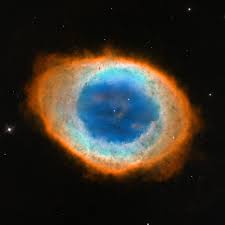
1) Nubula


  1. A nebula is a gas cloud that has dust, hydrogen, helium gas and plasma
  2. “Thus, the more masses clump together, the greater their gravitational attraction will be to other bodies and particles in their vicinity” 
  3. “Stars that evolve into red giants can lose their outer layers during pulsations in their outer layers, known as their atmospheres. This released matter is typically 97% hydrogen and 3% helium, with a few other trace materials.” 
Picture
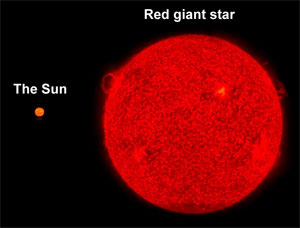
2) Red Giant
  1. A red giant star is a dying star in the last stages of stellar evolution. 
  2. After a few other billion years that the red giant has been through it’s process it will become a white dwarf.
  3.  They have used up all the hydrogen in their cores, are burning hydrogen in the shell around the (inert) helium core, and are not massive enough to be able to create high enough temperatures to initiate helium burning

4) Supernova

The Book
  1. An exploding star that increases in brightness many thousand of times
  2. The outer layer of the star is ejected, while the core collapses into a very hot neutron star about 20 kilos.
  3. This occurs at the end of a star's lifetime, when its nuclear fuel is exhausted and it is no longer supported by the release of nuclear energy… This will cause a blast wave that ejects the star's envelope into interstellar space. The result of the collapse may be, in some cases, a rapidly rotating neutron star that can be observed many years later as a radio pulsar.

3) White Dwarf

  1. A white Dwarf is a small a star that has a low to medium mass just like the Sun
  2. A star that has exhausted the most or all of it’s nuclear fuel and has collapsed to a very small size
  3. Its surface becomes very hot, and sometimes exceeding 25,000 K ​

5)Neutron Star

  1.    A star of extremely high density composed entirely of      neutrons
  2. Smaller stars and more massive than white dwarfs
  3. The electrons are forced to combine with protons to produce neutrons

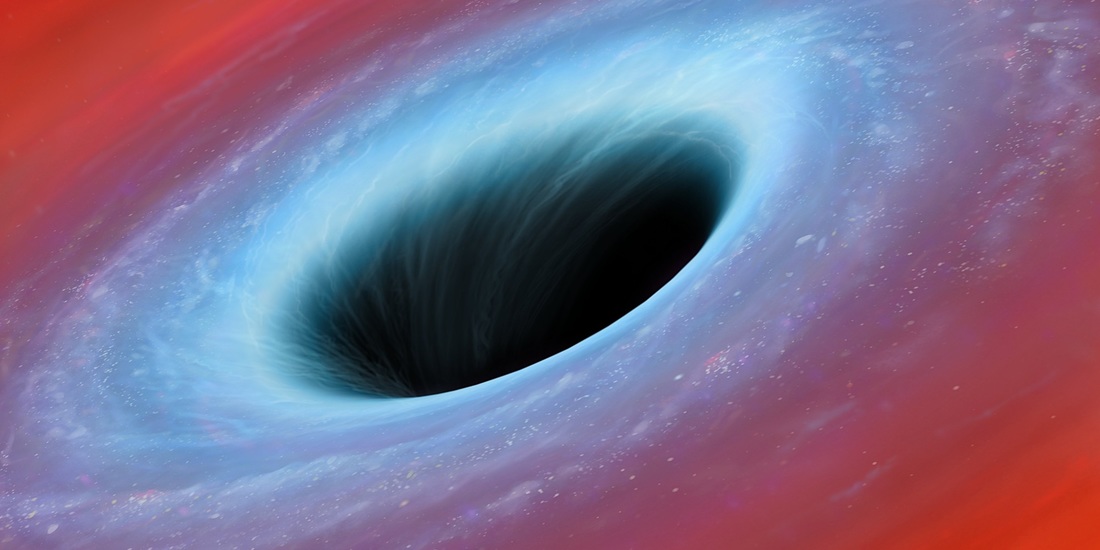
6) Black Hole
​

  1. A massive star that has collapsed to such a small volume that its gravity prevent the escape of everything, including light
  2. Are very hot. Light can even escape their surface.
  3. Anything that goes near a black hole will be sucked up and lost forever
Picture
Picture
Picture
Picture
White Dwarf
Supernova
Neutron Star
Powered by Create your own unique website with customizable templates.
  • Home
  • The Life Cycle Of the Deneb Star
  • Nuclear Fusion In Stars
  • Tools for Studying Astronomy
  • Refferences